In short —
Our Ceylon is picked at dawn in the Dimbula highlands, withered the same afternoon, rolled and oxidized within the day, and sealed before it ever sees a warehouse. From estate to Al Ain takes eleven days — short enough that the malt and honey arrive intact. Taste the current harvest beside a three-month-old pack and the difference is a lesson in freshness.
Picked before the sun climbs
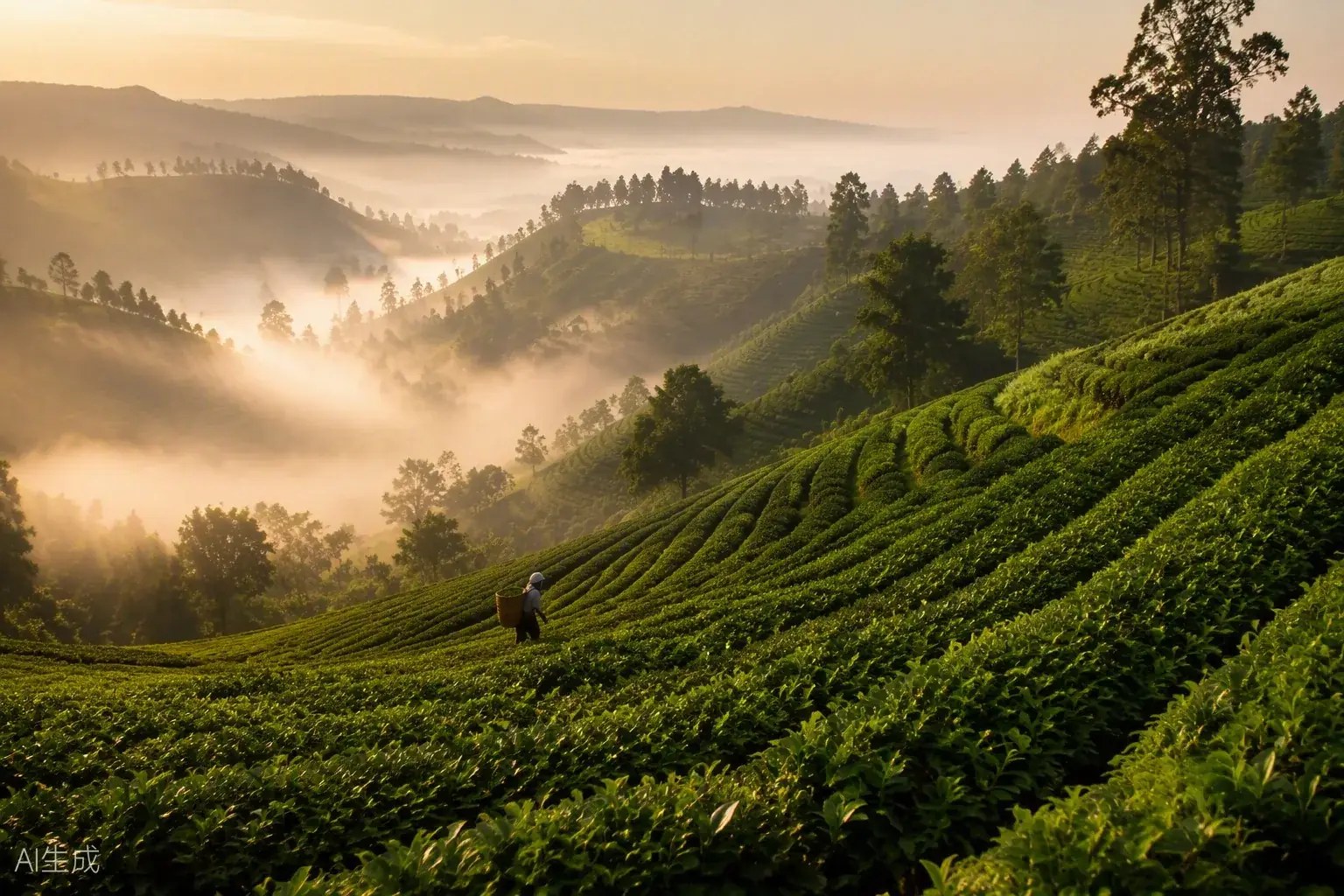
Our Ceylon starts at 1,200 meters in Sri Lanka's central highlands, where the day begins in mist. Pluckers take two leaves and a bud — the tender growth at the tip of each stem — and they take it early, before the heat coarsens the leaf's chemistry.
Altitude is flavour. Cool nights slow the bush, and slow growth concentrates the aromatic oils that later read as malt, honey and citrus peel in the cup.
Withering, rolling, firing
Within hours the leaf is withered — laid in moving air until pliant — then rolled to break the cells and start oxidation, the controlled darkening that turns a green leaf into black tea. Firing stops it at exactly the amber point; a minute late and the honey notes burn off.
The lot is graded, sealed within the day, and flown — never slow-shipped — because tea waits for no one, and freshness is a decision made at origin.
Freshness is a decision made at altitude.
The last mile: Al Ain
In Al Ain the sealed lots rest in cool, dark storage before they are packed into double-lidded tins — light-proof, airtight, sized to finish within eight weeks of opening. From the highland mist to a Gulf pantry, the leaf never meets the two things that kill it: light and damp.
What lands in your cup, then, is not just Sri Lanka. It is a chain of small decisions — dawn picking, exact firing, sealed flight, dark storage — each one invisible, and each one tasted.