In short —
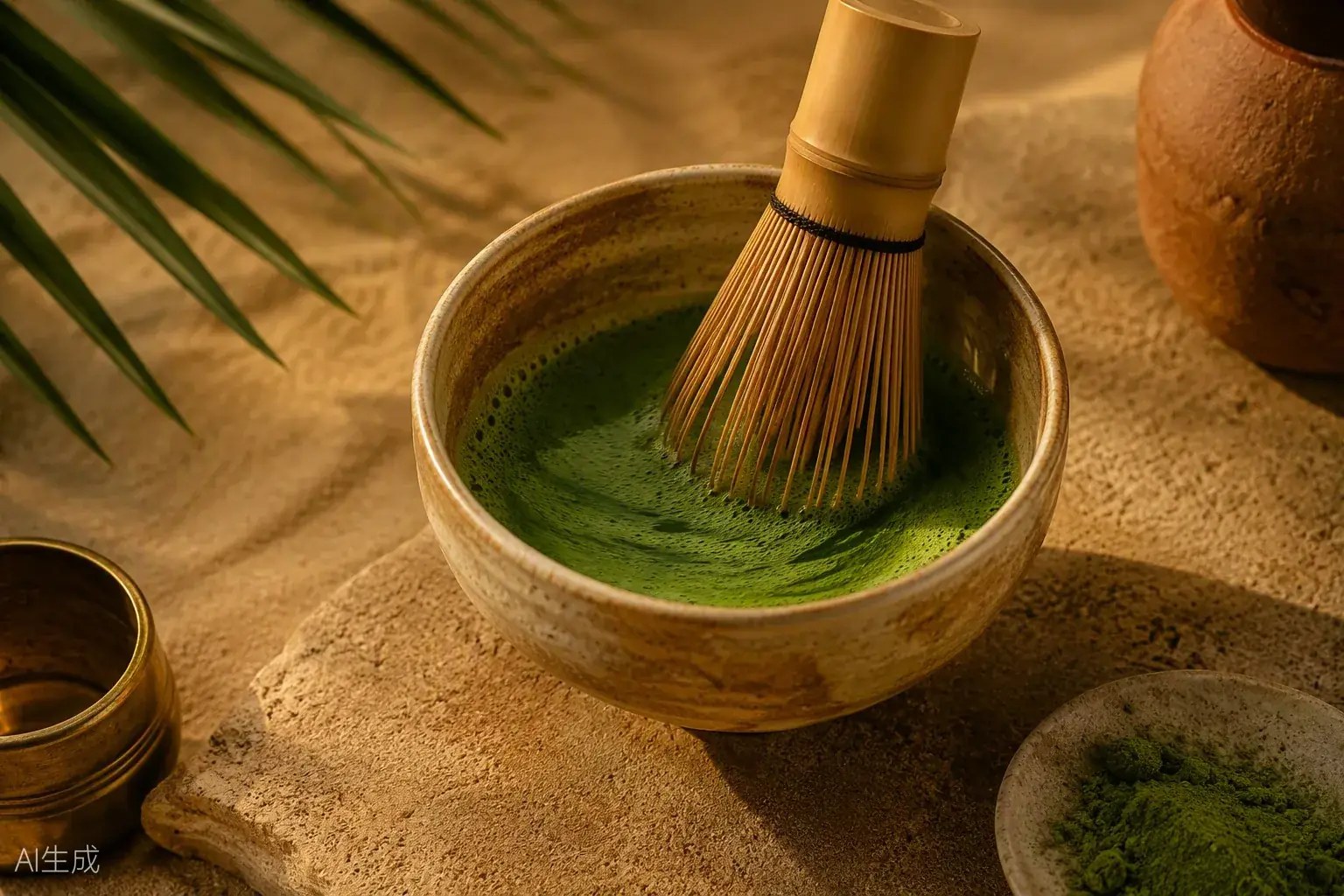
L-theanine is an amino acid almost unique to tea. It crosses the blood-brain barrier, raises alpha brain waves, and smooths caffeine's edge into calm alertness. Shade-grown teas like matcha carry the most — one reason a bowl of matcha feels meditative where coffee feels urgent.
The molecule behind the calm
L-theanine is an amino acid found almost exclusively in the tea plant — and it is the reason tea wakes you up differently than coffee. It crosses into the brain and nudges alpha-wave activity: the state of relaxed alertness monks described centuries before anyone had a name for it.
Alone, caffeine sharpens but jitters. Paired with L-theanine — as it naturally is in every true tea leaf — the edge rounds off. Focus arrives, but the shoulders stay down.
Which teas carry the most
Shade wins. Tea bushes grown under cover — matcha above all — pump out more L-theanine because shading slows the conversion of amino acids into tannins. This is why one bowl of ceremonial matcha feels like four hours of quiet, not a spike and a crash.
Green teas come next, then oolongs, then black. But even a brisk Ceylon carries enough L-theanine to soften its 50mg of caffeine into something civil.
Coffee borrows tomorrow's energy. Tea spends today's, slowly.
How to brew for calm
Cooler water protects the calm: L-theanine extracts readily at 75–80°C, while bitterness needs heat. Brew green tea and matcha cool and you tilt the cup toward focus; boil it and you tilt it toward bite.
And drink it in the morning majlis, not on the run. The molecule does its work; the ritual doubles it.